
EU 90% Emissions Cut by 2040 Explained How 27 Countries Plan to Hit Climate Neutrality by 2050
12/17/20252 min read
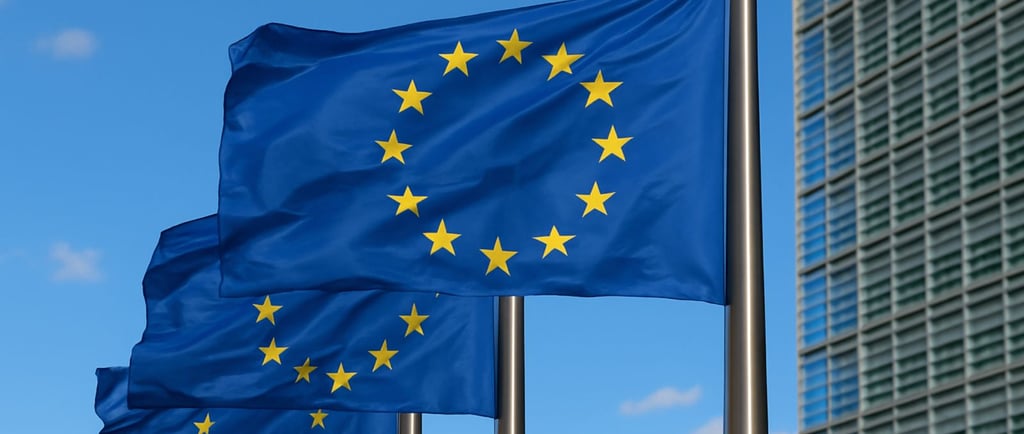

The European Union has reached a provisional political agreement to legislate a 90% cut in net greenhouse gas emissions by 2040 compared with 1990 levels, binding all 27 member states and defining the structure of Europe’s energy and industrial systems for decades. This target moves from an abstract ambition to a legal benchmark that governments, investors and companies must treat as a planning constraint rather than a discussion point. It marks one of the most far reaching climate decisions ever taken by a major economic bloc.
The agreement specifies that up to 5 percent of 1990 net emissions may be covered by high quality international credits starting in 2036, which forces at least 85% of reductions to occur domestically through real cuts or certified removals. The deal also shifts the launch of the new emissions trading system for buildings, road transport and small industry known as ETS2 from 2027 to 2028. Monitoring and reporting of these emissions will still begin in 2025 so authorities can stress test data systems and compliance frameworks before any financial obligations begin.
The new 2040 target sits between two legally binding milestones: the commitment to reduce emissions by at least 55 percent by 2030 and the requirement for climate neutrality by 2050 under the European Climate Law. This creates a continuous trajectory rather than a policy gap. For utilities, heavy industry and transport operators, the 90 percent target compresses the timeframe for deep decarbonisation into just 15 years while providing only a narrow offset channel and explicit reliance on domestic carbon removals inside the main carbon market.
The Commission has presented the deal as a pragmatic response to competitiveness pressures, energy costs and geopolitical uncertainty. It is also designed to anchor Europe’s updated climate pledge ahead of COP30 in Belém. Parliament and national governments must still give formal approval, but the direction is now set.
In effect, the EU has locked its economy into a 90% by 2040 and climate neutral by 2050 pathway with just 5 percent room for foreign credits. These numbers will determine how trillions in future infrastructure spending, industrial strategy and climate technology investment unfold across Europe.
Earthian AI
Earthian AI is the financial risk intelligence engine headquartered in the Netherlands with international presence in Munich, Germany, and Paris, France.
hello@earthianai.com
© 2025. All rights reserved.
Netherlands
Munich: Josephspitalstraße 15, Bavaria 80331, DE
Enschede: De Hems 10, 7522NL, NL (Mailing)
Tel: +31 641 19 16 81
Germany
Amsterdam: Rokin 92, 1012KZ, NL
Tel: +49 160 978 38 013
France
Station F
Paris: 5 parvis Alan Turing, 75013 Paris, France